
 Treats & Chews
 Probiotics
 Joints
 Dental
 Senior Dog
 See All

The Best Allergy Supplements for Dogs
Allergies are common in dogs, but if you've bought two or three supplements and your dog still won't stop scratching or rubbing their face, you already know it's not always an easy fix.
That cycle of trying something, hoping, and watching nothing change can be exhausting, especially when it's your dog that’s affected. You want them to be comfortable and to feel like themselves again. When product after product falls short, it's hard not to feel like you're letting them down.
This guide is here to change that. By the end, you'll know exactly which supplements can genuinely help your dog find relief, what ingredients to look for, and how to read a label so you can make a confident choice for your pet.
What Causes Allergic Reactions in Dogs?
Before reaching for any supplement, start by understanding the root cause of your dog's symptoms. What exactly is triggering the allergy? Identifying the source matters because not all allergies come with the same reactions. A supplement that works well for one dog may have little to no effect on another, so choosing the right solution depends on knowing exactly what you're dealing with.
The Three Main Types of Dog Allergies
Seasonal or Environmental Allergies
These are triggered by airborne particles such as pollen, grass, and mold spores. Symptoms tend to flare in spring and fall, but dogs in certain climates or those sensitive to dust mites and indoor mold can struggle year-round.
Food Allergies
Allergic food reactions are caused by specific proteins in the diet. Chicken and beef are among the most common causes, though dairy and wheat come up, too. Unlike seasonal allergies, food-triggered reactions can occur at any time because they depend more on diet than on seasonal changes.
This type of allergy often presents as a mix of skin problems and GI issues such as loose stools, gas, or chronic upset stomach, alongside the itching. Our guide on what causes stomach issues in dogs can help you tell whether digestion or diet is at the root of it.
Contact Allergies
These occur when your dog's skin reacts directly to something it comes into contact with, such as certain cleaning products, synthetic fabrics, or even specific types of grass. These tend to appear on exposed areas such as the belly and face, affecting your dog's overall skin health. For solutions, our article on the best products for dog skin covers what actually works.
Common Symptoms to Watch For
- Excessive scratching, itchy skin, or paw licking
- Red, irritated skin or hot spots
- Recurring ear infections
- Sneezing or watery eyes (less common, but still worth noting)
If your dog’s symptoms have been going on for more than a few days or are getting worse, you should consider a vet visit before using supplements. A veterinary dermatologist can also be especially helpful for persistent cases. While supplements support allergy management, they're never a substitute for a proper diagnosis.
The Best Products for Dog Allergy Relief

When buying supplements for allergy relief, it's very important that every ingredient on the label is right for your dog and formulated at a dose that makes a difference. Here are two products you should have in your regimen:
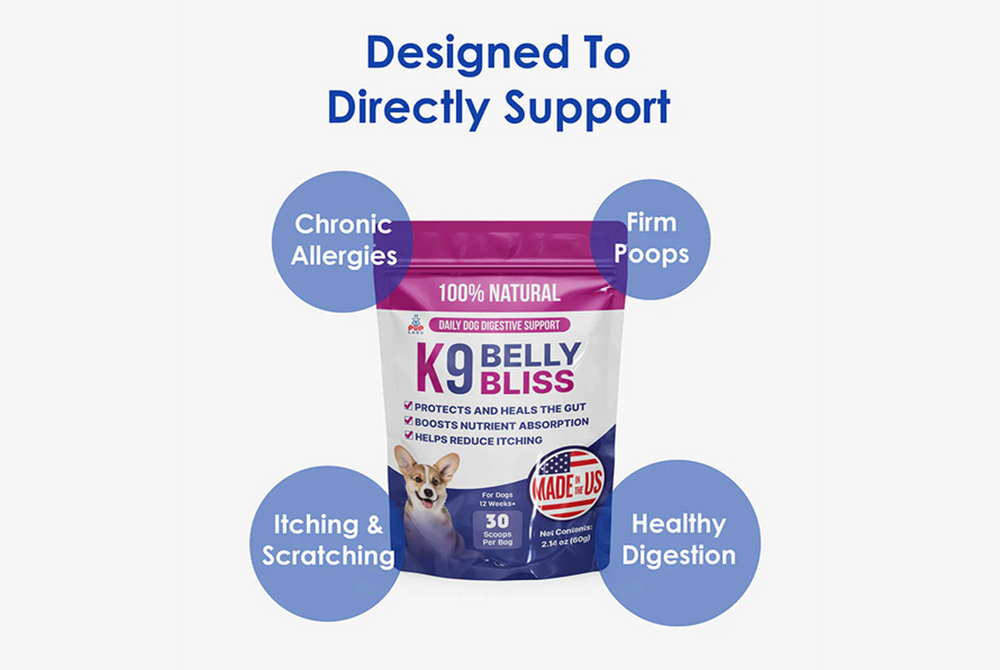
K9 Belly Bliss — Gut Support for Allergy-Prone Dogs
If your dog's itching comes with digestive issues such as loose stools, recurring ear infections, or chronic skin flare-ups, poor gut health may be driving most of it. Research increasingly shows that the gut and immune system are deeply connected, and that repairing the gut lining can reduce the inflammatory responses behind allergy symptoms.
K9 Belly Bliss is formulated with three active and important ingredients. These include:
- L-Glutamine, which supports cell growth in the gut wall lining
- N-Acetyl D-Glucosamine (NAG), which helps absorb harmful toxins before they trigger an immune reaction
- Reishi mushroom, which rebalances gut bacteria and reduces inflammation.
What it Supports:
- Reduced itching and skin flare-ups linked to gut dysfunction
- Healthier, more regular digestion
- Stronger gut barrier for long-term immune support
K9 Belly Bliss is manufactured in an NASC and GMP-certified facility, meaning what's on the label is what's inside the bottle. It's also a powder topper that mixes directly into dry or wet food, with flexible dosing based on your dog's weight.
Support your dog's gut health with K9 Belly Bliss.

K9 Soothe — Topical Relief for Irritated Skin
While K9 Belly Bliss works from the inside out, K9 Soothe addresses some of the more visible problems your dog is dealing with right now, such as the red skin and the constant scratching. It's a topical spray formulated to deliver direct, fast-acting relief to inflamed areas.
The formula targets what Pup Labs calls "Derma Dysfunction" – the skin-level breakdown that drives persistent itching and irritation.
Key Ingredients:
- BioFlavin Extract (250 mg) – A phytonutrient that targets skin inflammation and allergic reactions directly at the site
- Ozonated Coconut Oil (125 mg) – Helps BioFlavin absorb faster into the skin while also providing antibacterial protection
- Rose Water (400 mg) – Hydrates and moisturizes irritated skin, and the natural scent has a mild calming effect
- Aloe (400 mg) – Anti-inflammatory, antifungal, and antibacterial; soothes on contact and helps interrupt allergic reactions
- Witch Hazel (800 mg) – Reduces inflammation and irritation around hot spots for sustained relief
What it Supports:
- Fast-acting relief from itching, redness, and hot spots
- Skin hydration and barrier repair
- Antibacterial and antifungal protection on the skin's surface
Apply 3 sprays directly to affected areas, up to three times daily. It dries quickly and is formulated for external use only.
See K9 Soothe here
The Ingredients Behind the Best Allergy Supplements for Dogs

One reason many dog allergy products aren't effective is that they don't include the right combination of ingredients. Before choosing a supplement, it's important to understand which ingredients have solid research behind them, what they do, and what clinical studies show about their effectiveness. That clarity makes it easier to choose options that support dogs dealing with allergic reactions.
L-Glutamine
L-Glutamine is an amino acid that plays a central role in maintaining the integrity of the gut wall lining. When the gut lining is damaged or weakened, it becomes more permeable, allowing harmful particles to enter the bloodstream and trigger immune reactions. These reactions manifest as skin flare-ups, itching, and chronic inflammation.
Supplementing with L-Glutamine supports the growth and repair of the cells that make up the gut barrier. For allergy-prone dogs where gut dysfunction is part of the problem, this can help reduce the frequency and severity of immune overreactions over time.
When checking a label, look for L-Glutamine listed with a specific milligram amount to be sure of the product’s effectiveness. A common target is 5,000 to 10,000 mg per day of L-glutamine, which equals 5 to 10 grams. The right amount also depends on the weight of your dog, which is why K9 Belly Bliss uses flexible, weight-based dosing so your dog gets the right amount every time.
N-Acetyl D-Glucosamine (NAG)
NAG is a compound that supports the mucosal lining of the gut, acting as a buffer that helps absorb and neutralize harmful toxins before they can trigger an immune response. It also helps reduce gut inflammation, which is why it is a useful companion ingredient to L-Glutamine for dogs whose allergy symptoms are linked to digestive health.
Reishi Mushroom
Reishi is a medicinal mushroom with adaptogenic and anti-inflammatory properties. In the context of dog allergies, it works on two fronts:
- Helping rebalance gut bacteria that have been disrupted by poor diet, stress, or repeated antibiotic use
- Reducing the systemic inflammation that drives allergic reactions.
Aloe
Aloe is one of the most widely studied topical ingredients for skin relief. It has documented anti-inflammatory, antifungal, and antibacterial properties. It helps soothe irritated skin and interrupt the itch-scratch cycle that worsens allergic reactions over time. For dogs dealing with red, inflamed skin, it provides some comfort while supporting the skin's natural healing process.
Witch Hazel
Witch hazel is a natural astringent with strong anti-inflammatory properties. Topically, it helps reduce swelling and irritation around hot spots and areas of concentrated allergic reaction. Unlike some harsher topical treatments, it's gentle enough for regular use on sensitive skin.
Probiotics
The connection between gut health and your dog's immune system response is one of the most significant developments in veterinary medicine over the past decade. A large part of the immune system is regulated through the gut. When it's out of balance, the dog's immune system overreacts to common allergens.
This is why probiotic support may make a real difference for dogs with food-triggered allergies. If you want to understand this in detail, our guide on leaky pup gut breaks it down.
When buying probiotics, look for supplements that list specific strains such as Lactobacillus acidophilus and Bifidobacterium animalis with documented CFU (colony-forming unit) counts. A label that just says "probiotic blend" without listing the strain names or CFU counts tells you very little.
Also, note that quality control in the OTC probiotic market is inconsistent. Many chews don't actually deliver the live cultures listed on the label by the time they reach your dog, and third-party testing matters here more than anywhere else.
What to Look for on a Supplement Label

With so many options out there, it can be hard to know what to look for or what should be on the label. Here's a simple guide you can use before buying anything:
Specific Ingredient Amounts
If a label shows a "proprietary blend" with no milligram breakdown, you won't know what you're giving your dog. A brand with nothing to hide, like Pup Labs, lists exact amounts, and this is always the most important thing to check.
Ingredient Quality
Human-grade ingredients are held to higher manufacturing standards than feed-grade equivalents. This affects both purity and bioavailability. That is, how much of the ingredient gets absorbed and used by your dog's body.
Form
Soft chews are the easiest to administer for most dogs, and many pets can eat them like treats. Powders offer greater dosing flexibility, which matters for larger breeds that need higher omega-3 levels. Whatever form you choose, the best supplement is the one your dog will take consistently.
What to Avoid on a Supplement Label
Artificial colors, unnecessary fillers, and ironically, common allergens like soy, corn, and wheat are found in products designed to treat allergies.
Label Red Flags Checklist
- "Proprietary blend" with no mg breakdown
- No named probiotic strains or CFU count
- Soy, corn, or wheat in an allergy supplement
- No third-party testing certification
- Omega-3s listed without separate EPA/DHA amounts
- Artificial colors or synthetic preservatives
FAQs
How Long Before I See Results from a Dog Allergy Supplement?
Some supplements may take 4–8 weeks to show effects, especially omega-3s. Omega-3s typically take 4–6 weeks before you see a noticeable change in skin and coat health. Probiotics may show gut-related improvements in 2–4 weeks.
Consistency matters as well, so give it about 4-6 weeks before deciding whether something is working. If you're looking for immediate relief for your dog from acute symptoms in the meantime, your vet can advise on short-term options to use alongside supplementation.
Can I Use Supplements Alongside Apoquel or Cytopoint?
Generally yes. Omega-3 supplementation is commonly recommended as support alongside prescription allergy medications. What's most important is to always tell your vet what supplements your dog is taking, as well as any prescriptions.
Also, don't use supplements as a substitute for prescription treatment for moderate-to-severe allergies; they're formulated as supportive ingredients, not replacements for veterinary medicine.
Are There Any Supplements That Are Unsafe for Dogs?
The most important warning here is to never give your dog human allergy medications without veterinary guidance. Products containing pseudoephedrine or decongestants can be toxic to dogs, even in small amounts.
For supplements specifically, avoid products with undisclosed proprietary blends (you simply don't know what's in them) and watch for common dog allergens like soy, wheat, and corn appearing in a product meant to treat allergies. When in doubt, run it by your vet first.
What's the Best Allergy Supplement for Dogs With Sensitive Stomachs?
For dogs with allergies that cause digestive sensitivity, K9 Belly Bliss from Pup Labs is worth considering. It's formulated specifically with gut health in mind. The combination of L-Glutamine, NAG, and Reishi mushroom helps repair the gut lining, reduce inflammation, and rebalance gut bacteria. This can make a difference for dogs that react poorly to most supplements. It's also a powder topper that mixes directly into food, making it easier to introduce gradually and adjust the dose based on your dog's weight and tolerance.
As a general rule, introduce any new supplement slowly, and start with a half dose for the first week. This gives the digestive system time to adjust and helps you catch any sensitivity early before it becomes a bigger issue.
Can Puppies Take Allergy Supplements?
Many supplements are formulated for dogs 12 months and older. Always check the age guidance on the label, and consult your vet before giving any supplement to a puppy. Their immune systems are still developing, and what's appropriate for an adult dog isn't always right for a pup.
Conclusion
The right dog allergy supplement is the one with evidence-backed ingredients at meaningful doses, transparent labeling showing exactly what's inside, and verified quality control you can trust.
Supplements work best as part of a broader approach, alongside proper diagnosis, allergen management, and vet guidance when needed. They're not a magic fix, but when the right ingredients are used correctly, they can meaningfully improve your dog's quality of life.
We built Pup Labs around this standard because we know what it's like to watch a dog battle these health concerns and feel like you're running out of options. Every ingredient we use is there for a reason, at a dose that's designed to offer improvements. You can start with the K9 Belly Bliss and K9 Soothe, as both work can contribute to improving this condition in dogs.
References:
- Mueller, R. S., Bettenay, S. V., & Fieseler, C. (2004). Effect of Omega-3 Fatty Acids on Canine Atopic Dermatitis. Canadian Veterinary Journal, 45(3), 237–240.
- Müller, R. S. M., et al. Effect of Omega-3 Fatty Acids on the Reduction of Signs of Atopic Dermatitis in Dogs. Canadian Veterinary Journal. 2016.
- National Animal Supplement Council (NASC) – Quality Seal Program.
- Whole Dog Journal – Supplement Quality and Ingredient Standards.