Treats & Chews
 Probiotics
 Joints
 Dental
 Senior Dog
 See All
Home›Dogs›Dental Health
A Former Emergency Vet Tech Confesses
An Emergency Vet Tech Reveals Why the “Safe” Chew in Your Dog’s Mouth Might Be Your Next Vet Bill, Not a Clean Set of Teeth
AND: The Real Head-to-Head: Chews vs. Brushing vs. the One Routine That Carries Neither Risk
PLUS: Why I Quietly Stopped Handing Out the Products I Used to Recommend at Checkout
 By Jordan BlakePublished September 22, 2026
My name is Jordan Blake. I spent six years working overnight shifts in emergency veterinary care, the kind of clinic where the phone never really stops ringing.
I’m not going to say which one. A couple of my old coworkers are still on that floor.
Owners would carry their dogs in holding the same thing almost every time. A half-chewed antler. A splintered bully stick. A “vet recommended” dental chew straight off a shelf.
I gave them the answer I’d been trained to give. Dogs chew things, sometimes it goes wrong, it’s rare.
I said that for years before I actually sat down and counted how often it wasn’t rare at all.
Here’s what I never let myself add up. The fractured premolars. The blocked airways. The two thousand dollar extractions, all from something that got marketed to us as safe.
Then one night, a regular didn’t come in the way I expected him to.
Rusty, a five-year-old Labrador mix. His owner Dana used to bring him in every few months, always for the same reason. Another chew gone wrong.
About eight months later I ran into her at the dog park, off shift for once. Rusty ran straight up to me, tail going, and I crouched down out of habit to check his mouth.
No fresh chips. No swelling. Nothing.
I asked her, half joking, what happened to all the chews.
She laughed and said her new vet had actually sat her down and explained something nobody in six years of emergency visits had ever explained to me. The chew isn’t the safe part of the routine. It’s usually the risky part.
I told her I’d handed her a dozen different chews over the years, trying to find one that wouldn’t end in another visit. She said, gently, I know. That’s kind of the point.
I went home that night and actually looked at what Rusty’s routine had become. No chews. No fighting him to hold still for brushing. Just food, and a scoop of something on top.
The Part Nobody Explains When They Hand You a Bag of Dental Chews

Risk one is mechanical. Hard chews, antlers, bully sticks, they’re built to resist a dog’s bite, which is exactly the problem. Vets see the same tooth crack over and over, the upper fourth premolar, the one that takes the hardest bite force. Most fractures and chokes happen in the first and the last sixty seconds of a chew, right when a dog is most excited or most tired of working at it.
Risk two is behavioral. Brushing works, in theory, if it actually happens every day. In practice it mostly doesn’t. Most owners quietly give up within a few weeks, and a routine that only works when it’s followed daily isn’t really a routine at all.
That’s the part that never made it into the conversation I used to have with owners at checkout. Not whether the product worked. Whether anyone could actually keep using it without it backfiring first.
Why I Stopped Recommending Chews and “Just Brush Daily” After Six Years in Emergency Care

After enough overnight shifts with the same story walking through the door, I started scoring every option the way Dana’s new vet had scored hers.
1. Does it carry a fracture or choking risk?
2. Does it depend on the dog holding still and cooperating, every single day, forever?
3. Can an owner actually keep doing it without giving up?
Only one thing passed all three. I’d spent six years handing out the other two.
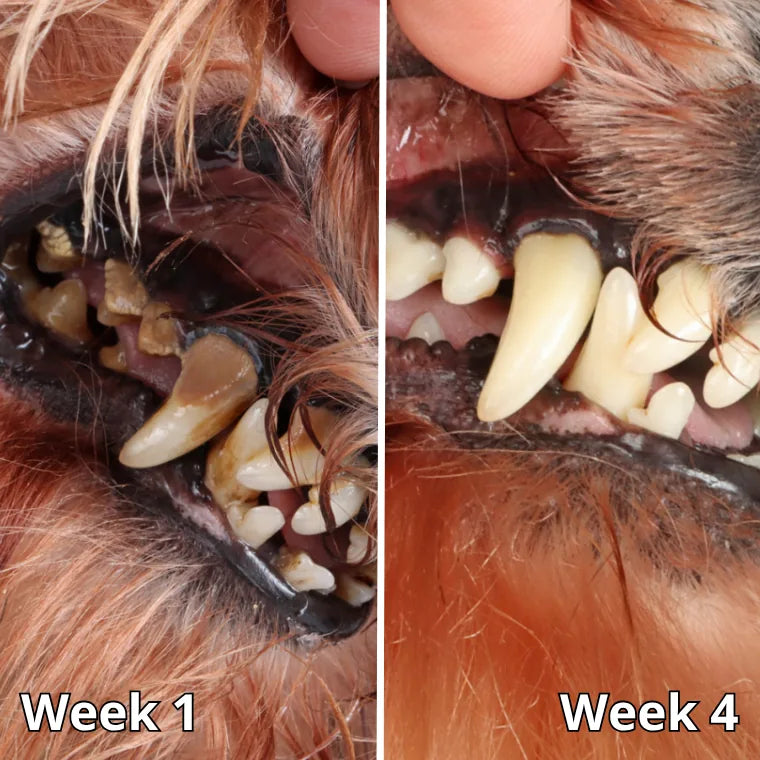
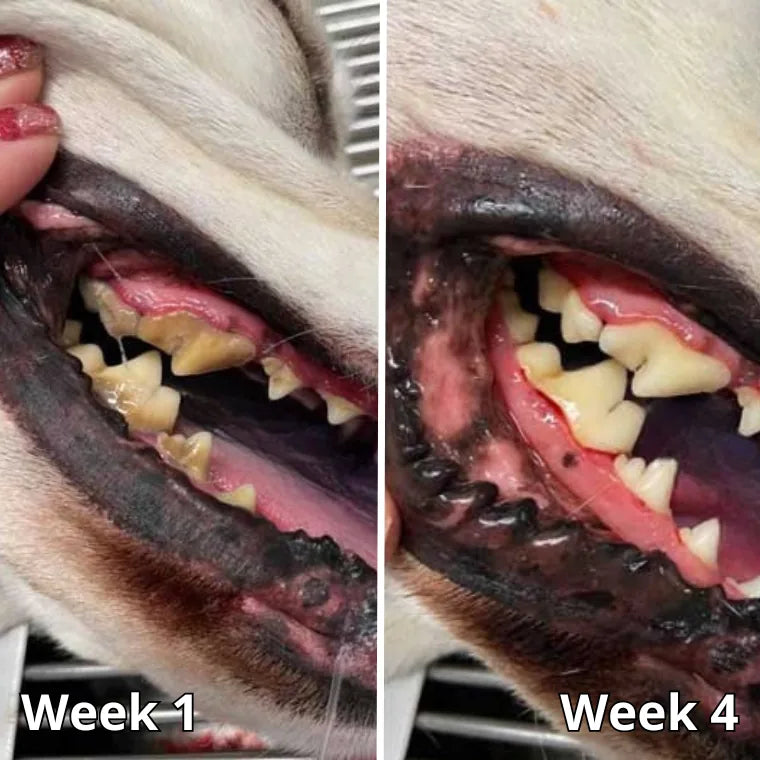
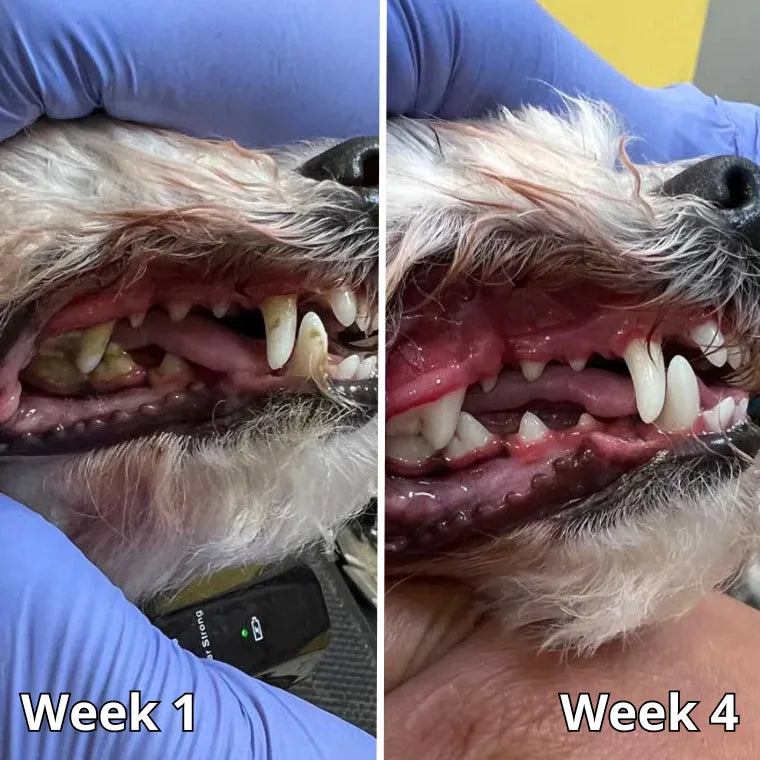
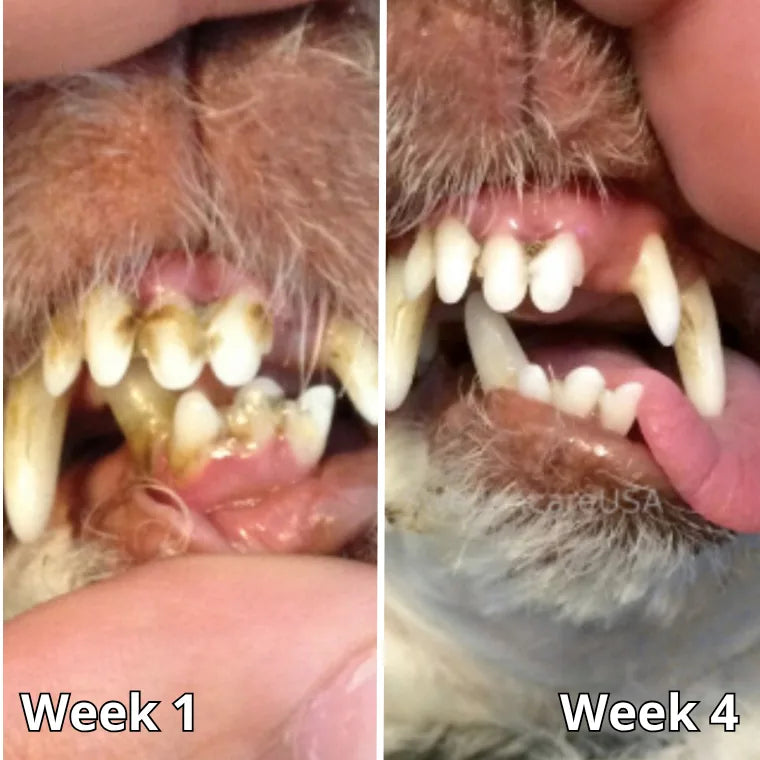
Real Dogs, Real Routines, Just Weeks Apart
No fractured teeth. No fights over a toothbrush. Just dogs whose owners swapped the risk for a scoop.
The Real Head-to-Head: Chews vs. Brushing vs. ProDenta
Scored on the two risks above, plus whether you’ll actually keep it up.
| Factor | Chews | Brushing | ProDenta |
|---|---|---|---|
| Fracture risk | High, especially on hard chews and antlers | None | None |
| Choking risk | Real, highest in the first and last 60 seconds of a chew | None | None |
| Compliance | Depends on the dog wanting to chew that day | Most owners quit within a few weeks | One scoop, added to food already being eaten |
| Time cost | A few minutes of supervised chewing | 2+ minutes daily, if it happens at all | Seconds, already part of feeding |
Same dog, same routine slot, only the risk changes.
What Actually Avoids Both Risks?
It wasn’t anything I’d ever handed across the counter. That’s the part I still think about.
ProDenta is an enzymatic powder, not a chew or a brush, that mixes straight into your dog’s food.
Because there’s nothing to bite down on and nothing to hold your dog still for, the fracture risk, the choking risk, and the daily fight over brushing all go away at the same time, not one at a time.
Kelp enzymes in the formula go to work on the tartar buildup at the gumline while your dog eats, doing quietly what a chew or a toothbrush was always supposed to do, without the risk either one carries.
One scoop a day. Nothing else about your routine has to change.

What Real Dog Parents Are Saying